The research team led by Professors WANG Yucai, ZhU Shu and JIANG Wei from the University of Science and Technology of China (USTC) published a research paper entitled Commensal-driven serotonin production modulates in vivo delivery of synthetic and viral vectors in Science on March 20. The study has for the first time elucidated the gut-liver immune regulatory axis jointly maintained by intestinal commensal bacteria and the intestinal endocrine system, and uncovered the fundamental mechanism underlying the body's non-specific clearance of drug delivery carriers. It provides a universal solution to the core problem plaguing the delivery field for decades, significantly improves the delivery efficiency and therapeutic effect of tumor-targeted therapy, mRNA therapy, gene editing and other treatments, and blazes a new trail for the clinical translation of biomedical delivery technologies.
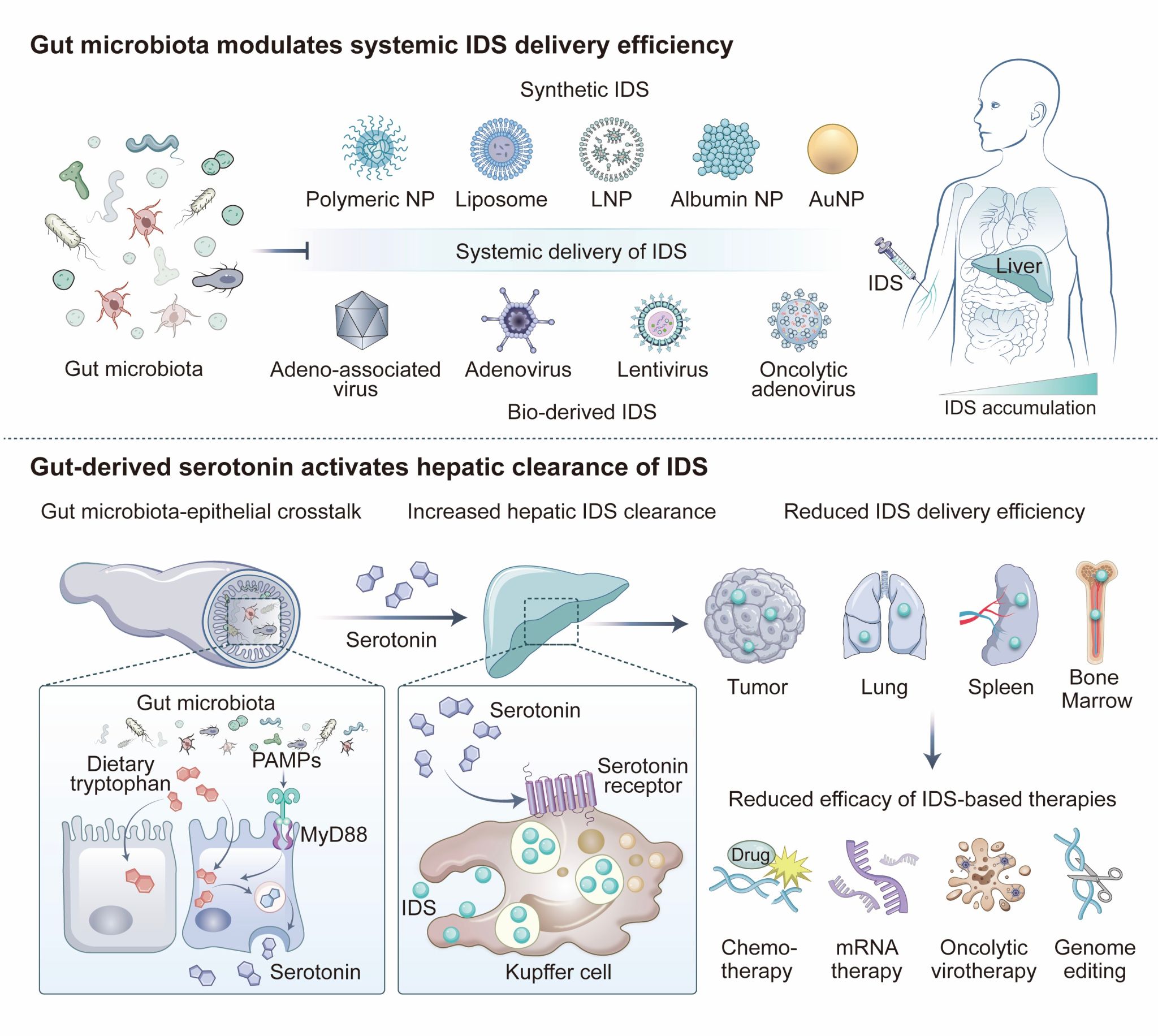
Gut microbiota maintains the clearance activity of the liver on delivery carriers by stimulating intestinal serotonin secretion.
Drug delivery carriers are a key underpinning of the modern biomedical field. They can effectively address issues such as the high systemic toxicity of chemotherapeutic drugs, poor stability of nucleic acid drugs, and low bioavailability of fat-soluble drugs, thus boosting the clinical application of tumor-targeted chemotherapy, mRNA vaccines, gene therapy and other therapies. However, for a long time, delivery carriers are prone to rapid clearance by the body after administration, leading to an extremely low drug concentration in target tissues. For instance, the effective delivery dose of existing nanomedicines to tumors is less than 0.7% of the total dose, which severely restricts therapeutic efficacy. Moreover, the academic community lacks safe and universal intervention methods for this problem.
Through systematic studies, the research team found that the tumor delivery efficiency of various delivery carriers (including polymeric nanoparticles, lipid nanoparticles and oncolytic adenoviruses) was significantly improved after clearing intestinal commensal bacteria in mice. The enhanced delivery efficiency can be directly translated into better therapeutic effects of anti-tumor approaches such as tumor chemotherapy, oncolytic virus therapy and protein replacement therapy. In addition, the efficiency of multi-organ gene delivery and somatic cell editing was also greatly increased, which is mainly attributed to the significantly improved blood circulation capacity of the carriers.
To unravel the underlying mechanism, the team developed a quantitative analysis system for single-cell morphology and carrier interaction behavior based on intravital imaging. This system confirmed that hepatic Kupffer cells are the terminal target cells of intestinal bacteria in regulating drug delivery, and the clearance of intestinal bacteria can lead to a significant decrease in their uptake capacity of delivery carriers, with the maximum reduction reaching 70%. Further studies clarified that intestinal epithelial cells are the core hub for sensing bacterial signals and regulating liver immunity, and serotonin secreted by the intestinal endocrine system is the key messenger molecule connecting intestinal bacteria and the liver immune system.
This study for the first time outlined the complete gut-liver immune regulatory axis: intestinal commensal bacteria activate the intestinal epithelial endocrine system to promote serotonin secretion; serotonin then activates hepatic Kupffer cells, enhancing their phagocytic capacity for delivery carriers, which in turn impairs carrier circulation and reduces delivery efficiency.
Experiments verified that intervening in this serotonin pathway or restricting tryptophan intake through dietary regulation can both significantly inhibit the clearance activity of hepatic Kupffer cells against delivery carriers. This intervention increases tumor delivery efficiency by 2-3 times and target tissue gene editing efficiency by 10-15 times, achieving remarkable therapeutic effect improvement in various therapy models.
Paper Link: https://www.science.org/doi/10.1126/science.adu7686
(USTC News Center)

